.webp)
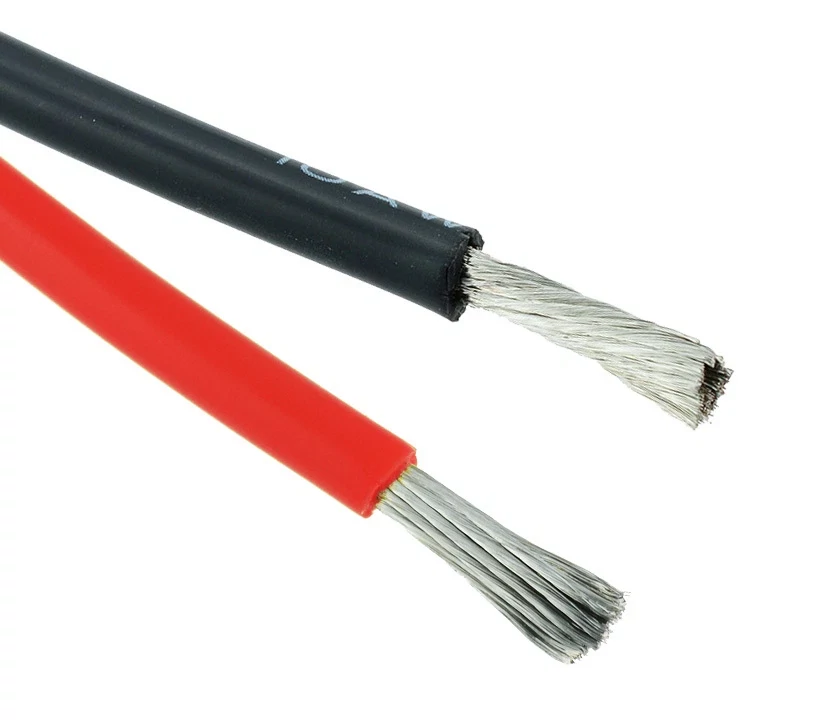
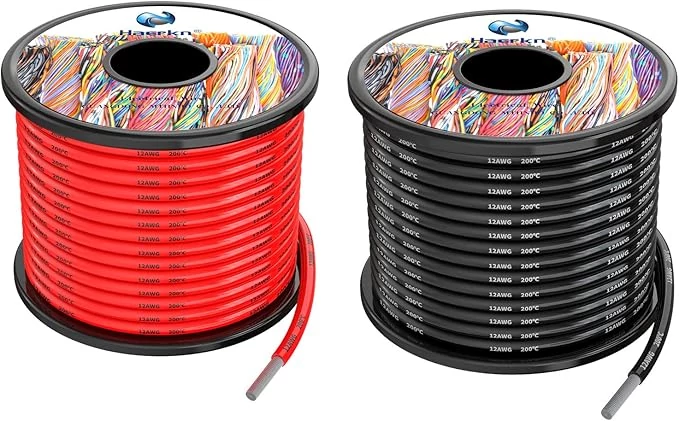
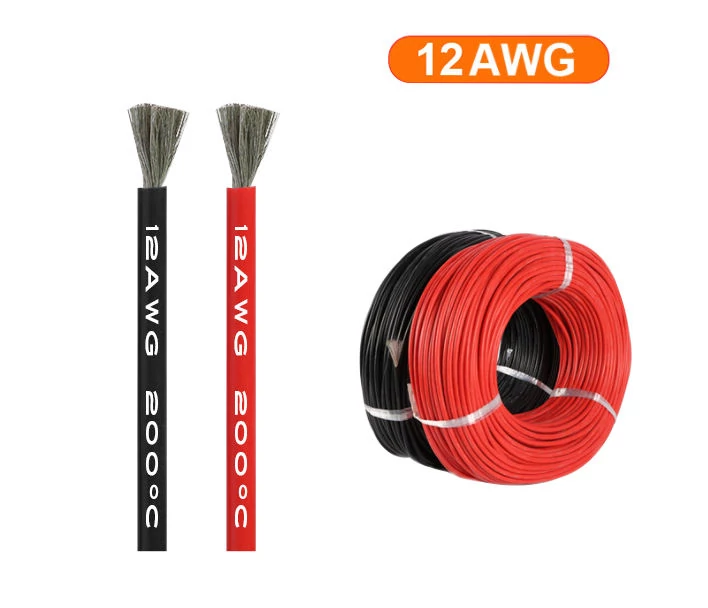
From household outlets to the sky-high demands of drone motors, 14AWG wire is the indispensable, all-purpose electrical workhorse. Its perfect balance of safe current capacity (15A), manageable size, and cost-effectiveness makes it the go-to choice. Crucially, in drones, 14AWG silicone wire is the critical power lifeline, uniquely balancing robust energy delivery with the vital need for minimal weight.
Ⅰ. Introduction
When it comes to electrical wiring, understanding different wire gauges is crucial for ensuring safety, efficiency, and project success. One of the most commonly used wire gauges is 14GA wire. This blog explores the characteristics, applications, advantages of 14GA wire and the method to choose a right wire for drone, which helps you make informed decisions for your electrical needs.
Ⅱ. What is 14GA Wire?
14-gauge copper wire, also known as 14 AWG (American Wire Gauge) cable, is a standardized electrical conductor with a nominal cross-sectional area of approximately 2.08 mm² (or 0.0032 in²). Its solid core typically measures 1.63 mm in diameter, while stranded versions offer greater flexibility.
This gauge is rated for a maximum current capacity of 15 amps in standard building wiring per the National Electrical Code (NEC) when used in common insulation types like THHN or Romex (NM-B). It exhibits a DC resistance of roughly 2.58 Ω per 1000 feet at 20°C.
Ⅲ. Common Applications of 14AWG Wire
14 AWG wire offers high versatility and is widely used in various electrical projects. Below are some of its most common applications:
1. Building Electrical Branch Circuits
In North American residential and commercial building electrical codes, 14 AWG is the standard wire gauge for 15-amp lighting and outlet branch circuits, typically paired with 15A circuit breakers.
2. Low-Voltage Equipment and Internal Wiring
Widely used in internal control circuits and power connection cables for various household appliances, power tools, and HVAC systems.
Commonly employed in low-voltage DC systems, such as certain vehicle auxiliary circuits, LED drivers, and small-scale power distribution.
3. Primary Discharge Line in Drone Battery Systems
In small-to-medium multirotor drones and high-performance fixed-wing drones, 14AWG silicone wire is the standard specification for the core discharge cable connecting the battery to the power distribution board or ESC.
Its continuous current-carrying capacity of approximately 20-25A makes it suitable as the power backbone for drone propulsion systems with sustained currents within this range and higher peak currents. It efficiently transmits energy from high-voltage lithium batteries (e.g., 4S or 6S LiPo) to motors. Strict requirements exist for conductor purity, insulation heat resistance, and weight. High-purity tinned copper cores and flexible, high-temperature-resistant silicone insulation are essential to optimize performance and ensure safety.
4. Audio and Low-Voltage System Engineering
Serves as a medium-length high-fidelity speaker interconnect in home theater or professional audio systems to minimize power loss.
Also used for DC power lines in security systems and smart home installations.
5. Model Electronics Projects
In RC aircraft, RC cars, and other DIY electronics projects, 14AWG is one of the standard universal wires for connecting batteries, motors, and high-power loads (e.g., headlights, heaters).
Ⅳ. Why Choose 14GA Wire?
Selecting the appropriate wire gauge is critical for the safety and functionality of your electrical system. Here are the reasons why 14GA wire is often preferred:
1. Electrical Performance and Code Compliance
● Current Rating and Protective Device Standardization: Under typical installation conditions in North American electrical codes (e.g., NEC), 14 AWG copper wire has a rated continuous current capacity of 15 amperes. This makes it the standard choice perfectly matched with 15-amp circuit breakers or fuses, ensuring reliable operation of protective devices during circuit overloads—a cornerstone of building electrical safety.
● Balancing Conductor Resistance and Voltage Drop: With a DC resistance of approximately 2.58 Ω/km, it delivers an acceptable voltage drop (typically <3%) for common 15A loads within reasonable wiring lengths (usually <30 meters), guaranteeing stable supply voltage to end devices.
● Applicability of Insulation Ratings: Available with various insulation materials (e.g., THHN, MTW, silicone) to meet voltage resistance (typically 600V), heat resistance (e.g., 90°C), and mechanical protection requirements across diverse environments (dry, humid, high-temperature).
2. Mechanical and Physical Characteristics
Balance of Dimensions and Flexibility:
● Moderate Diameter: A conductor diameter of approximately 1.63mm enables sufficient current-carrying capacity while facilitating installation, bending, and conduit routing.
● Optional Stranded Construction: Multi-strand 14AWG cables offer exceptional flexibility, making them ideal for applications involving frequent movement or vibration (e.g., internal equipment wiring, drones).
● Weight and Space Efficiency: Among wire gauges with comparable current-carrying capacity, 14 AWG offers a favorable trade-off in weight and space footprint. This is critical for weight- and space-sensitive applications like aerospace models, vehicles, or portable devices.
3. Cost and Availability
● Economy: Compared to thicker cables like 12AWG or 10AWG, 14AWG uses less copper, significantly reducing costs. This is a key factor for high-volume residential wiring or cost-sensitive projects.
● Extremely High Standardization and Availability: As one of the most commonly used wire gauges, 14AWG is widely available globally with comprehensive model and accessory options, making procurement and replacement exceptionally convenient.
Ⅴ. Application-Specific Advantages
● Optimal Power-to-Weight Ratio: For small-to-medium drones, power systems typically draw continuous currents between 20-30A. 14AWG silicone wire (which offers superior heat dissipation and slightly exceeds standard current ratings) handles these currents while minimizing cable weight, directly enhancing flight duration and maneuverability.
● Space Compatibility: Its diameter precisely matches the solder terminals of common aviation connectors like XT60 and EC5, enabling compact and reliable installation.
● Environmental Resistance: The silicone insulation layer is flexible and withstands extreme temperatures (-60°C to 200°C), enduring drone flight vibrations and potential physical friction.
Ⅵ. What kind of drone battery requires 14GAwire?
The following battery types typically use 14AWG wire as the main discharge line:
1. Medium-power racing/acrobatic aircraft batteries:
● Typical specifications: 4S batteries with capacities ranging from 1300mAh to 2200mAh and continuous discharge rates between 75C and 120C.
● Current calculation example: A 4S 1500mAh (1.5Ah) 100C battery has a theoretical sustained current of 1.5Ah × 100C = 150A. However, note that while these smaller capacity batteries have high peak currents, they last only briefly. ESCs and motors do not draw such high currents for extended periods. During actual flight, the average sustained current typically ranges between 20-35A. 14AWG silicone wire (rated for 25-30A sustained current) is the preferred choice balancing weight and performance.
2. Small-to-Medium Long-Endurance/Aerial Photography Drone Batteries:
● Typical specifications: 4S or 6S batteries with capacities ranging from 3000mAh to 6000mAh, featuring relatively low discharge ratings (e.g., 15C–30C).
● Current calculation example: A 6S 5000mAh (5Ah) 25C battery has a theoretical continuous current of 5Ah × 25C = 125A. However, these drones prioritize efficiency over brute force, typically pairing with low-KV motors and larger propellers. Actual sustained operating currents during flight often range between 25A-35A, with peaks potentially reaching 50-60A. 14AWG wire is a sufficient and effective weight-saving choice for this application.
3. Some FPV Racing Battery:
● Typical Specs: 6S battery, capacity ranging from 1000mAh to 1300mAh, with extremely high discharge rates (100C+).
● Analysis: While the theoretical current is high (e.g., 1.3Ah × 100C = 130A), FPV racing drones are extremely weight-sensitive, and full throttle is an instantaneous burst. For extreme weight reduction, many pilots opt for 16AWG or even 18AWG silicone wire for this configuration. However, for those prioritizing more stable voltage, reduced wire loss, or a more conservative setup, 14AWG offers a more reliable and versatile choice, providing a better balance between current capacity and weight.
Ⅶ. Conclusion
This blog systematically introduces the fundamental characteristics, application scenarios, and selection advantages of 14GA (14 AWG) wire. As a standardized wire specification rated for 15 amperes, 14GA wire features a moderate diameter, excellent flexibility, and high cost-effectiveness. It is widely used in building electrical branch circuits, internal wiring of low-voltage equipment, audio engineering, and model electronics projects. The article emphasizes its critical role in drone battery systems: As the primary discharge line for small-to-medium drone batteries, 14GA silicone wire balances current-carrying capacity (approximately 20–25A continuous current) with weight, meeting the demands of mid-power racing/aerial photography drone batteries while offering environmental adaptability like heat resistance and vibration tolerance. Finally, the article provides a detailed analysis of drone battery types suitable for 14GA wiring, helping readers make informed choices based on actual current requirements and weight constraints.