Drone soccer is an emerging competitive sport where players pilot small, protected quadcopters inside an arena to score goals—similar to traditional soccer, but in the air. Each drone is enclosed in a spherical cage, allowing it to bump, collide, and maneuver aggressively without damaging the aircraft. The game combines elements of aerobatics, robotics education, and team strategy, making it popular in schools, STEM programs, and international competitions.
Drone soccer not only develops flying skills but also encourages students to learn about aerodynamics, electronics, programming, and battery safety, making it both a sport and a hands-on engineering training tool.
CHARACTERISTICS OF DRONE SOCCER
● Spherical Protective Cage
The drone is enclosed in a durable 360° cage, allowing safe collisions, blocking, and contact during gameplay.
● High Maneuverability
Designed to accelerate, brake, hover, and turn quickly to perform offensive and defensive movements inside a confined arena.
● Indoor Competition Environment
Games are usually played indoors, so drones must be stable, responsive, and able to handle repeated impacts and tight spaces.
● STEM + Sports Integration
Combines competitive gameplay with technical education—students learn about flight control, electronics, programming, and repair.
● Standardized Size & Power Limits
Many leagues specify drone dimensions, weight, propeller size, and battery type to ensure fairness and safety.
CHARACTERISTICS OF DRONE SOCCER BATTERIES
● High Discharge Capability (C-Rate)
Needs batteries with high burst discharge to support quick acceleration and agile movements.
● Lightweight & Compact
Lower weight improves agility and helps drones meet league weight limits.
● Stable Voltage Output
Consistent voltage is critical for fast throttle response and avoiding mid-match voltage sag.
● High Safety & Durability
Batteries must withstand frequent impacts and remain safe in collisions.
● Fast Turnaround Charging
Competitions often require multiple rounds, so batteries must support reliable charging between heats.
Recommended solutions
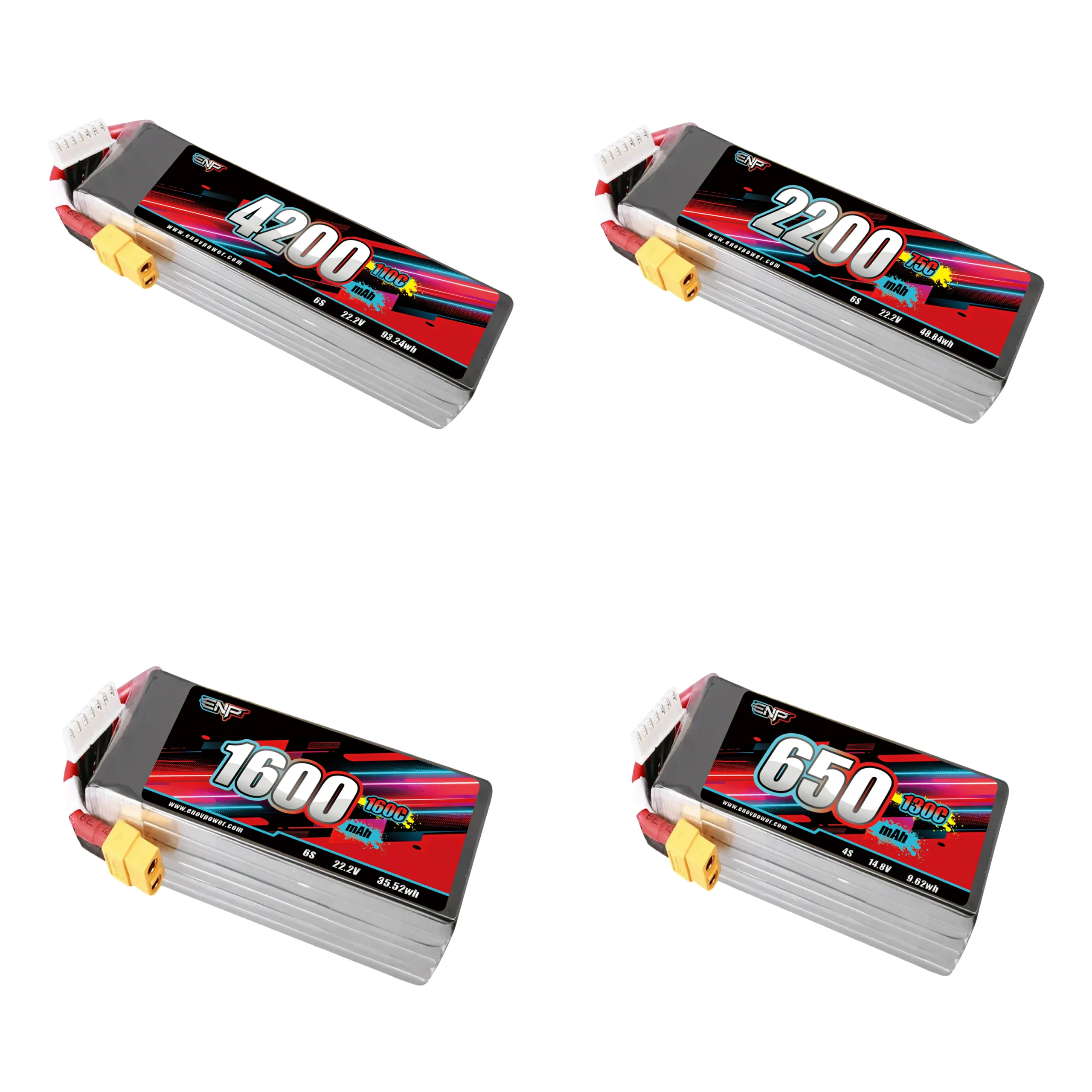
High-rate lithium polymer batteries (LiPo) are the two most popular types of power sources in the field of drone football, featuring lightweight design, high output power, and rapid response capabilities. LiPo batteries provide exceptional burst power and high discharge rate, enabling fast offensive and defensive actions. They offer strong power, agility, and stable performance for drone football, making them the core power source choice for training and official competitions.
High-Discharge LiPo Battery Solution
Features:
Powerful output, lightweight, strong burst force. This is the most commonly used battery type in drone football competitions.
Recommended Specifications:
Voltage: 2S (7.4V) or 3S (11.1V)
Capacity: 850 – 1000mAh
Discharge rate: 60C – 130C (for rapid acceleration and flexible maneuvering)
Applicable scenarios: Formal competitions, situations requiring high burst of offensive and defensive actions.