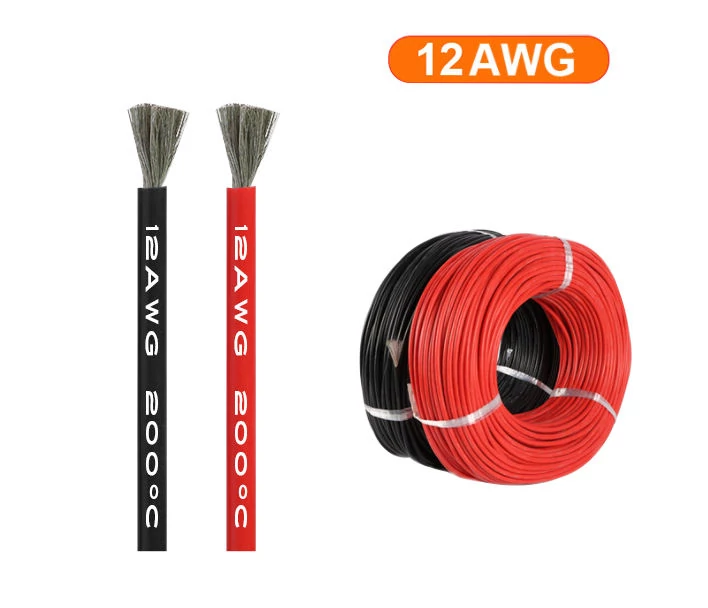
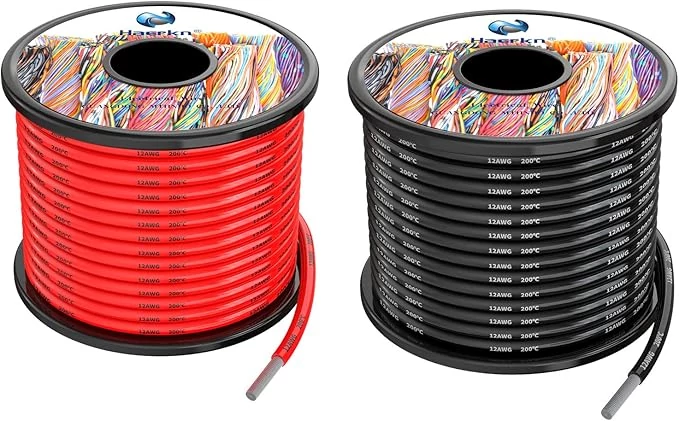
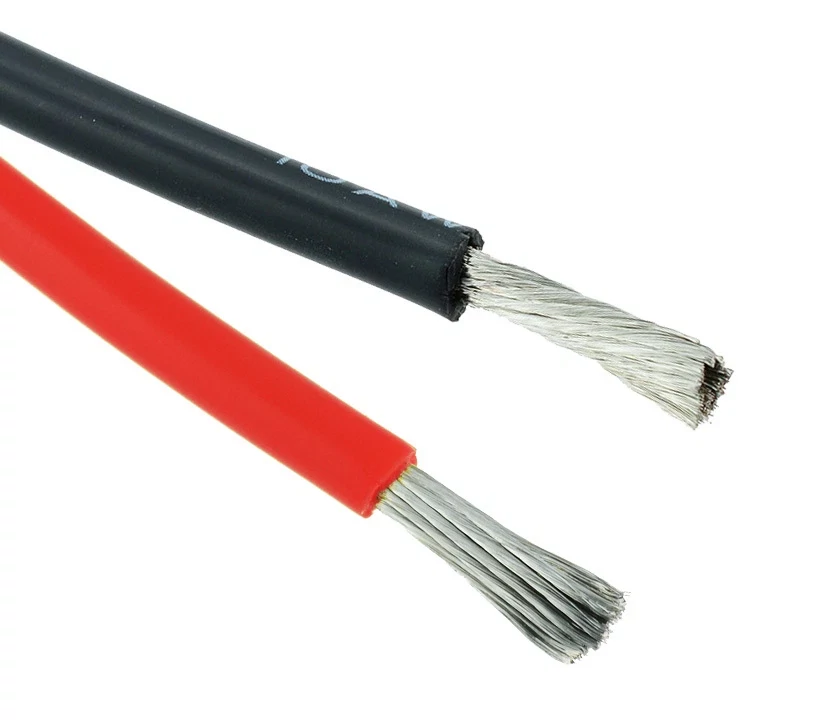
.webp)
Selecting battery cables for drones is no trivial matter. Choosing the wrong gauge is like pairing a powerful heart with narrow or bulky blood vessels. Overly thin wires can cause overheating, fires, and sudden performance drops; overly thick wires add unnecessary weight while sacrificing flexibility and flight endurance. This guide aims to cut through the confusion, revealing how to strike the perfect balance between safety thresholds, performance limits, and practical considerations—building an efficient, reliable energy lifeline for your drone.
1. Types of UAV Battery Connection Cables and Suitable UAV Models
The selection of AWG (American Wire Gauge) for UAV power cables is directly related to their current-carrying capacity. A smaller number indicates a thicker cable capable of carrying higher current. The following table outlines the mainstream specifications and their distinctions:
| AWG Specification | Conductor Diameter (mm) | Maximum Continuous Current (Silicone Wire) | Key Differences & Features | Suitable UAV Types |
|---|---|---|---|---|
|
8AWG |
3.26 |
50-70A |
Thickest diameter, strongest current-carrying capacity; but heavy (approx. 15g/m), poor flexibility; extremely low voltage drop (<0.1V/1m). |
Large payload drones (7-inch & above), high-power FPV drones (e.g., 6S battery + large motors), professional cinematography drones. |
|
10AWG |
2.59 |
30-40A |
Balanced medium-thick wire for current and weight; lighter than 8AWG (approx. 10g/m), slightly improved flexibility; suitable for main power on medium/large drones. |
Medium-sized drones (5-7 inch), long-endurance with large batteries (e.g., 4S 3000mAh+), equipment requiring low voltage drop. |
|
12AWG |
2.05 |
20-30A |
The gold standard for FPV drone main power lines; moderate weight (approx. 7g/m), good flexibility; small voltage drop (<0.2V/1m). |
Mainstream 5-inch FPV racing/freestyle drones, 4S batteries (1300-2200mAh), typical freestyle/racing builds. |
|
14AWG |
1.63 |
15-20A |
Thinner and lighter than 12AWG (approx. 5g/m); suitable for medium/low-power applications; slightly higher voltage drop (<0.3V/1m). |
Small drones (4-inch & below), motor wires for 5-inch builds, power for VTX/cameras (high-current accessories). |
|
16AWG |
1.29 |
10-15A |
The standard specification for FPV motor wires; light weight (approx. 3g/m), excellent flexibility; suitable for small/medium current transmission. |
Motor wires for most racing drones (4-5 inch), power for VTX (5V/1A), camera (5V/0.5A). |
|
18AWG |
1.02 |
7-10A |
Thinner and lighter (approx. 2g/m); good flexibility but limited current capacity; suitable for micro equipment. |
Micro drones (3-inch & below, e.g., “Sub 250g”), motor wires for lightweight builds, LED light power (low current). |
|
20AWG |
0.81 |
5-7A |
Thin and light (approx. 1.5g/m); suitable for low-current signals or power; relatively high voltage drop (>0.5V/1m). |
Receiver (SBUS/ELRS) power, LED lights (e.g., navigation lights), low-power sensors (e.g., GPS). |
|
22AWG |
0.64 |
3-5A |
Thinnest commonly used wire (approx. 1g/m); extremely flexible but very weak current capacity; ideal for signal transmission. |
Signal wires (e.g., UART/TX/RX, I2C sensors), remote control channel wires, connections between FC and peripherals (e.g., OSD). |
2. Consequences of Using Overly Large or Small Battery Cables for UAVs
2.1 Cable “Too Small” (Diameter Too Thin): Most Dangerous, Directly Threatens Safety & Performance
A cable is “too small” when its continuous current rating is less than the UAV’s total current at full throttle (or lacks a 10%-20% safety margin). Example: A 5-inch FPV drone (total current 20-30A) should use 12AWG silicone wire (rated 30-40A), but mistakenly uses 16AWG (rated 10-15A).
① Safety Hazards: Overheating/Fire, Cable Fracture
Cause: Thin diameter → High resistance (R=ρL/A, where A is cross-sectional area) → Sharp increase in Joule heating (Q=I²RT) → Insulation melts (silicone withstands ~180°C, can exceed 200°C under overcurrent) → Copper exposed → Short circuit (positive/negative contact).
Consequences:
Battery Fire/Explosion: LiPo short circuit internal temperature can exceed 500°C, releasing flammable gases (e.g., carbon monoxide), causing fire or even explosion. Cable Fracture: Thin diameter → Poor vibration resistance (flexibility of stranded wire depends on diameter, thin wires prone to vibration fatigue failure) → Motor stops → UAV crashes uncontrollably.
Example: A 5-inch racing drone uses 16AWG silicone wire (~0.04Ω/m) for its main discharge line. At 20A full-throttle current, cable temperature rises to 250°C within 10 seconds, silicone melts, wires short, battery ignites, drone destroyed.
② Performance Degradation: Insufficient Power, Reduced Flight Time
Cause: Thin diameter → High resistance → Increased voltage drop (V=IR) → Significant reduction in battery voltage reaching motors (motor RPM is proportional to voltage).
Consequences: Insufficient Power: At full throttle, drone cannot reach designed speed (e.g., designed 120km/h, actual 80km/h); reduced climb rate (unable to climb to 50m).
Reduced Flight Time: Voltage drop causes flight controller to misread battery voltage (e.g., actual 11.1V, FC reads 10.5V), triggering low-voltage protection prematurely (e.g., set at 10.8V for 3S), shortening flight time from 8 mins to 5 mins. Example: A 5-inch FPV drone uses 18AWG silicone wire (~0.06Ω/m). With 15A total current, voltage drop is 0.9V. Battery voltage 14.8V (4S), motor voltage only 13.9V, RPM drops 15%, noticeable power loss.
③ Equipment Damage: ESC and Motor Burnout*
Cause: Thin diameter → High voltage drop → Low input voltage to ESC → ESC’s MOSFETs (core components controlling motor current) must output higher current to maintain motor RPM → MOSFETs overheat (>150°C threshold) → Short circuit failure.
Consequences: ESC Burnout: MOSFET short → ESC cannot control motor → Motor stops.
Motor Burnout: Thin motor wires → High resistance in motor lines → Motor windings overheat (>180°C) → Insulation melts → Windings short.
Example: Using 16AWG motor wire (~0.04Ω/m) between ESC and motor. With 15A motor current, voltage drop on motor wires is 0.6V. Motor winding temperature rises to 200°C, insulation melts, windings short, motor burns out.
2.2. Cable “Too Large” (Diameter Too Thick): Impacts Practicality, Adds Unnecessary Cost
A cable is “too large” when its continuous current rating is far greater than the UAV’s total current at full throttle (e.g., by over 50%). Example: A 5-inch FPV drone (total current 20-30A) should use 12AWG, but mistakenly uses 8AWG silicone wire (rated 50-70A).
① Increased Weight: Reduced Flight Time, Degraded Maneuverability
Cause: Thick diameter → High weight (e.g., 8AWG ~15g/m vs. 12AWG ~7g/m) → Increased total UAV weight (e.g., +8g for 1m cable) → Motors require more power to maintain flight → Faster battery drain.
Consequences: Reduced Flight Time: 10% weight increase → ~10% shorter flight time (e.g., designed 8 mins, actual 7 mins).
Degraded Maneuverability: High weight → Sluggish turns, flips (e.g., freestyle drone cannot perform fast rolls).
Example: 5-inch FPV drone uses 8AWG silicone wire (15g/m) vs. 12AWG (7g/m), adding 8g. Flight time shortens from 8 to 7 mins, roll response slows.
② Reduced Flexibility: Difficult Routing, Susceptible to Vibration
Cause: Thick diameter → Poor flexibility (e.g., 8AWG much less flexible than 12AWG) → Difficult to route in confined spaces (e.g., arms, FC compartment) → Cable forced into sharp bends → Metal fatigue (stranded copper in thick wires prone to fracture under prolonged vibration).
Consequences:
Difficult Routing: Thick wire cannot pass through arm routing holes (e.g., 10mm arm diameter, 8AWG diameter 3.26mm, difficult to pass).
Cable Fracture: Thick wire at sharp bend points fractures due to vibration fatigue → Motor stops → UAV crashes.
Example: Using 8AWG silicone wire as motor wire, needing to pass through an 8mm arm hole. Forced routing creates a 90° bend. After 50 flights, wire fractures at bend point, motor stops, drone crashes.
③ Increased Cost: Unnecessary Expense
Cause: Thick diameter → Higher price (e.g., 8AWG costs ~2-3x 12AWG) → Increased build cost.
Consequence: For commercial drones (e.g., agricultural, filming), cost increase reduces competitiveness. For hobbyists, adds unnecessary expense (e.g., paying more for 8AWG when 12AWG suffices).
④ Compatibility Issues: Connector and Cable Mismatch
Cause: Thick diameter → Requires larger connector (e.g., 8AWG needs AS150 connector rated 150A) → UAV frame may only support smaller connectors (e.g., XT60 rated 60A) → Cannot plug in.
Consequence: Need to replace connector or frame interface, increasing modification cost. If forced, may cause connector looseness → poor contact → increased voltage drop → power loss.
3. How to Select the Appropriate Cable for Your UAV Battery
Selecting the right cable is not just about AWG; it’s a systematic engineering process considering “Electrical, Mechanical, and Environmental” factors.
3.1. Core Matching Principle: Determine AWG Based on Maximum Continuous Current
This is the fundamental step. Estimate or look up your UAV’s continuous current under maximum load (e.g., full-throttle climb).
Calculation Reference:For multirotors, Total Current ≈ Max Current per Motor × Number of Motors. g., 4 motors each drawing 30A at max thrust gives ~120A total.
Conservative Selection:For safety, the cable’s continuous current rating should be slightly higher than your calculated maximum, with a 10%-20% margin.
3.2. Essential Cable Type: Prioritize Silicone-Insulated Stranded Wire
Cable “differences” are largely determined by material and construction, crucial for UAV applications.
① Insulation Material:Strongly recommend silicone wire. Compared to PVC, it offers superior flexibility (easier routing in tight spaces), wider operating temperature range (typically -60°C to +200°C), lighter weight, and better resistance to vibration fatigue. This is key for reliability in FPV drones subject to frequent shocks and vibrations.
② Conductor Structure:Always choose multi-strand (stranded) copper wire, avoid solid core wire. Stranded wire can bend repeatedly without breaking, has better vibration resistance, and provides more uniform current distribution.
③ Conductor Material:Prefer oxygen-free copper (OFC) or tinned copper strands for good conductivity and corrosion resistance. Use a magnet test (real copper is non-magnetic) for a basic material check.
3.3. Consider Specific Application Scenarios and Connectors
① Main Battery Lead:Connects battery to FC/ESC, carries highest current. Typically use 10AWG or 12AWG silicone wire based on drone size/power. g., 5-inch racers often use 12AWG, but may need 10AWG for long-endurance flights with large batteries to reduce loss.
② Motor Wires:Connect ESC to motor. Typically match or exceed the wire gauge supplied with the motor. For 5-inch builds, 16AWG is common standard, with 14AWG for ultra-high-power setups.
③ Connector Matching:Cable gauge must match the connector’s current rating. g., XT60 connectors officially recommend 12AWG cable, while XT90 connectors (rated 40-50A) recommend 10AWG or thicker. Using an undersized cable makes the connector a bottleneck, causing overheating.